
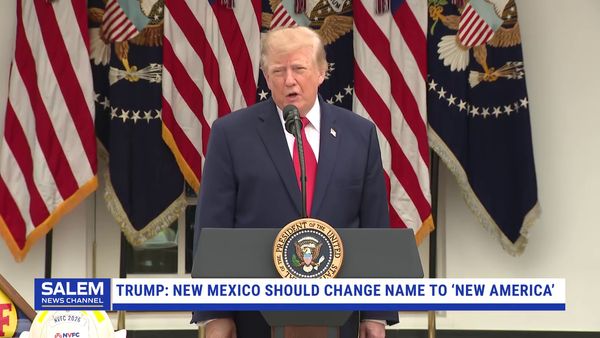



President Donald Trump is renewing his call for New Mexico to change its name to "New America," arguing that the change would better reflect the state's identity as part of the United States.
In a post on Truth Social Monday, Trump urged state officials to consider the change.
"New Mexico should immediately change its name to New America. We are not Mexico, we are the United States of America!" Trump wrote.
The president also claimed that renaming the state would have economic benefits, suggesting that "home values and incomes would rise" as a result.
Trump did not provide evidence supporting that prediction or explain how a name change would affect property values or household incomes.
Monday's remarks were not the first time Trump has proposed renaming New Mexico. The president previously raised the idea in September.
The latest proposal follows other efforts by the Trump administration to change the names of prominent geographic locations.
In August, Trump signed an executive order directing that Lake Ontario be renamed "Lake America," a move tied to ongoing trade tensions between the United States and Canada.
The president also took similar action last year when he moved to rename the Gulf of Mexico the "Gulf of America."
Those naming decisions have generated debate over presidential authority, geographic identity and the extent to which the federal government can change established place names.
New Mexico became the 47th state in 1912, although the name had been used for the region for centuries before statehood.
The state's name reflects its Spanish colonial history and predates the establishment of the modern nation of Mexico.
Any formal effort to rename New Mexico would face significant legal and political hurdles. Unlike federal geographic designations, changing the name of a state would require a more extensive legal process.
Trump has not announced a formal proposal or timeline for pursuing the change, and it remains unclear whether New Mexico officials intend to consider the suggestion.
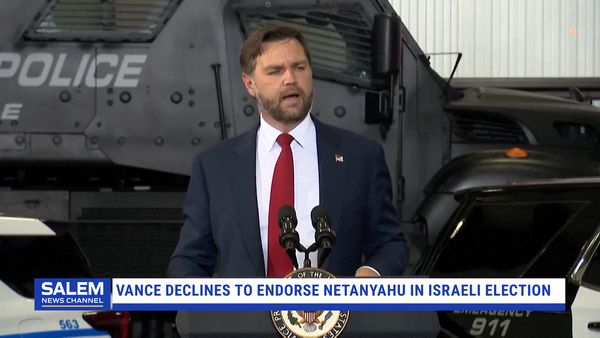
Vice President JD Vance is declining to endorse Israeli Prime Minister Benjamin Netanyahu for reelection, taking a different approach from President Donald Trump, who publicly backed the Israeli leader over the weekend.
During an interview with journalist Mark Halperin aboard Air Force Two, Vance was asked whether he supported Netanyahu's reelection bid.
"I'm not anti-endorsing him. I'm not pro-endorsing him," Vance said.
The vice president's comments come after Trump issued a strong endorsement of Netanyahu on Sunday in a Truth Social post addressed to the "Great People of Israel."
Trump praised Netanyahu's leadership and argued that keeping him in office was important to American interests in the region.
"If Israel has the wrong Leader, which would be anyone other than Bibi, America will have to do this work ourselves, and I am not inclined to do so," Trump wrote.
The president's endorsement comes ahead of Israel's upcoming election and follows months of tensions between Washington and Jerusalem over regional security and diplomatic efforts.
Trump and Netanyahu have maintained a close political relationship, particularly regarding Iran and Israel's national security. However, disagreements have emerged over Israeli military operations in Lebanon and Gaza, including actions that have complicated U.S.-led diplomatic initiatives.
Despite those differences, Trump has continued to publicly support Netanyahu and his leadership.
Vance, meanwhile, has stopped short of expressing either support or opposition to the Israeli prime minister's candidacy.
His comments do not necessarily signal a disagreement with Trump over U.S. policy toward Israel, but they highlight a difference in how the two administration officials are approaching the upcoming election.
Israeli voters elect members of the Knesset, the country's parliament, rather than directly choosing a prime minister. The next government will depend on which political parties can form a governing coalition.
For now, Trump has made his preferred candidate clear, while Vance has chosen not to take a public position on Netanyahu's reelection bid.
Larry Elder discusses the widespread protests in France that began over inadequate supplies and deteriorated into violent riots, resulting in the destruction of historic buildings. The speaker emphasizes the importance of accurate information and the assumptions made by protestors regarding police brutality against black individuals, using the case of George Floyd as an example. Contrary to popular belief, data shows that police killed fewer unarmed black men in 2019 than commonly assumed, and more unarmed white individuals were killed by police that year. The speaker also highlights a study suggesting that police are more hesitant to use deadly force against black suspects than white ones. The video encourages viewers to seek out factual information rather than assumptions when forming opinions.
Dennis Prager, after nearly two years since a severe accident left him quadriplegic, made a powerful return at a public appearance in Florida. During his speech, Prager recounts the details of his fall and the initial prognosis of palliative care, emphasizing his refusal to be defined by his condition. He discusses his remarkable progress, including breathing without a ventilator and continuing his work, such as completing his commentary on Leviticus. Prager shares his philosophy on maintaining a positive identity despite life's adversities, stressing the importance of not viewing oneself as a victim. His resilience and humor shine through as he reflects on his journey and the support he received from friends and colleagues, including Larry Elder, who believes Prager’s story will inspire many.
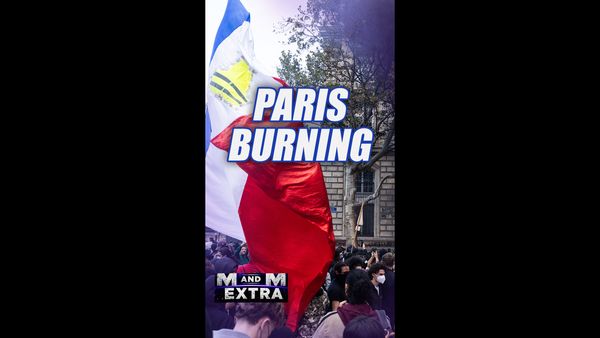
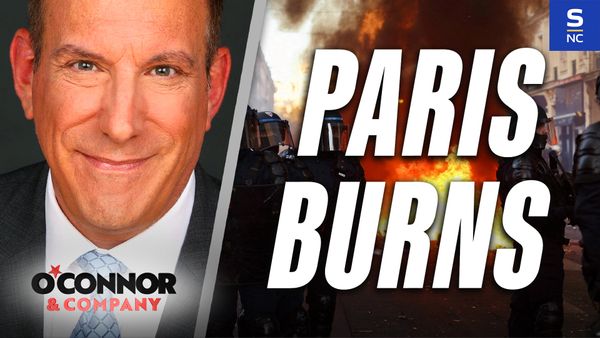
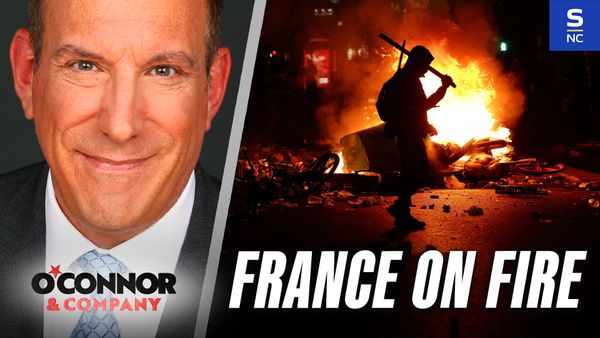
A student protest in France over issues such as overcrowded classrooms and high costs has escalated into widespread unrest. Initially sparked in September, the protests quickly gained momentum as various left-wing groups, including social democrats, communists, and the black bloc, joined forces. Their opposition is largely directed against the potential presidency of Marine Le Pen, a far-right nationalist candidate, who is favored to win the upcoming election in six months.
The protests have since spiraled into riots and acts of vandalism, with no unified demands or leadership. This unrest coincides with the end of President Emmanuel Macron's term, who has been in power for nine and a half years. The situation is further complicated by the involvement of migrant groups in urban areas, leading to looting and chaos. The escalating violence highlights broader discontent with the cost of living and educational issues in France. For the latest updates, tune into our new channel for live coverage.
The Louvre has shut it's doors as protests in Paris, France boiled over into full-blown riots?—2,000 shops looted, damages in the hundreds of millions.
----
M and M Extra! If you love smart unscripted talk show chemistry, you’re in the right place. Two iconic talk radio hosts. One unfiltered daily conversation. No scripts. No spin. Just Mike Gallagher and Mark Davis breaking down the news the way it should be with zero apologies.
Like and subscribe to youtube.com/@MandMExtra for more content.
Watch full episodes here:
https://www.youtube.com/playlist?list=PL8EGNf1WbbwMRurHjD-q-sft3OQfbxop8
Check out highlight clips from all our shows:
https://www.youtube.com/playlist?list=PL8EGNf1WbbwPQn44WIEh9LfT3hP1lng9w
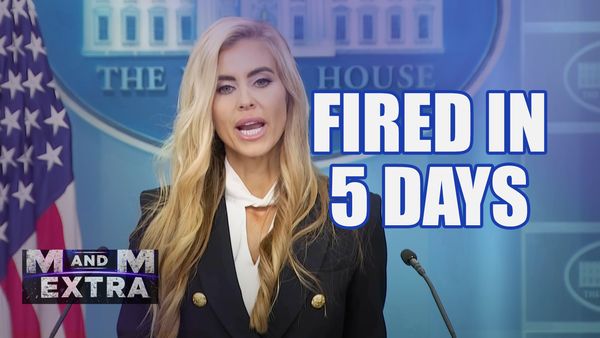
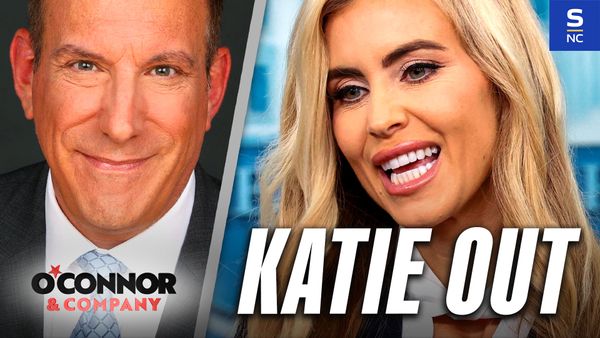
Mike and Mark get into a heated debate over whether the media piled on Katie Zacharia too hard during her brief, disastrous run as White House press secretary—especially after she got exposed for never passing the bar exam. Was it fair coverage or a feeding frenzy?
----
M and M Extra! If you love smart unscripted talk show chemistry, you’re in the right place. Two iconic talk radio hosts. One unfiltered daily conversation. No scripts. No spin. Just Mike Gallagher and Mark Davis breaking down the news the way it should be with zero apologies.
Like and subscribe to youtube.com/@MandMExtra for more content.
Watch full episodes here:
https://www.youtube.com/playlist?list=PL8EGNf1WbbwMRurHjD-q-sft3OQfbxop8
Check out highlight clips from all our shows:
https://www.youtube.com/playlist?list=PL8EGNf1WbbwPQn44WIEh9LfT3hP1lng9w
In this episode of Hugh Hewitt: Hugh Clips, the conversation centers on the critical importance of the upcoming Senate races in the midterm elections. President Trump urges voters to consider him when casting their ballots, highlighting the potential long-term impact of these elections on his legacy and the future political landscape. The discussion features insights from Matthew Continetti, who emphasizes that the outcomes of these races could shape the next two years of Trump's presidency and even set the stage for a potential Democratic presidency in 2029. The potential for unified Democratic control of Congress under President Trump and the subsequent implications for legislative agendas are thoroughly examined, underscoring the pivotal role of this year's Senate elections.
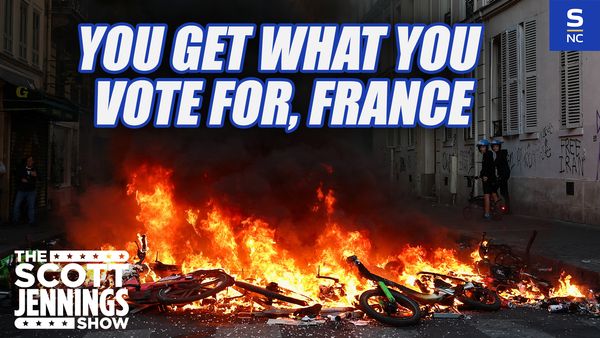
In the midst of political upheaval in France, the consequences of left-wing policies are laid bare. This clip from Scott Jennings’ show highlights the severe repercussions faced by citizens who supported the left, including the ransacking of over 1,500 shops and mass arrests. The speaker criticizes Emmanuel Macron for his perceived ineffectiveness and suggests that law enforcement should take a tougher stance against the protesters. The clip underscores the potential risks of aligning with left-leaning ideologies and serves as a cautionary tale for other nations, particularly the United States.
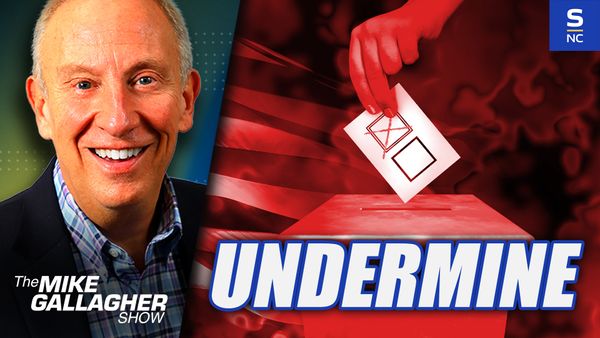
A one-time tax targets a few hundred ultra-wealthy residents while open-border voting goes largely unchallenged and media treat enforcement as the threat. The shared alarm is over securing elections more than over prices, borders, or the cost of leaving both open.
In this insightful conversation, former White House Press Secretary Sean Spicer discusses various topics, including his recovery from an accident, the challenges of his former role, and the upcoming midterm elections. Spicer shares his personal experience with a recent accident and his ongoing recovery, noting the difficulties he faces with mobility. He offers an in-depth look into the demanding nature of being a White House Press Secretary, emphasizing the behind-the-scenes work and the need for self-awareness and preparation. Spicer also provides an analysis of the upcoming midterm elections, discussing key battleground states and the potential impact on the political landscape. This interview offers valuable perspectives on both personal and political matters.
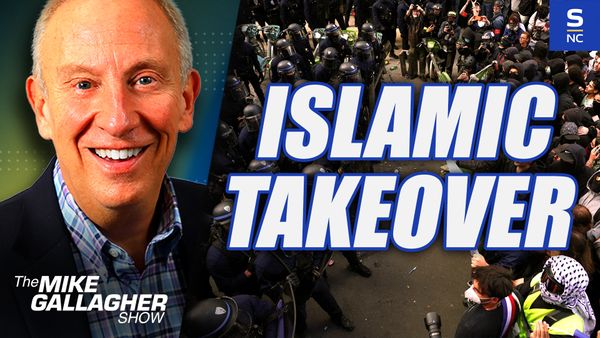
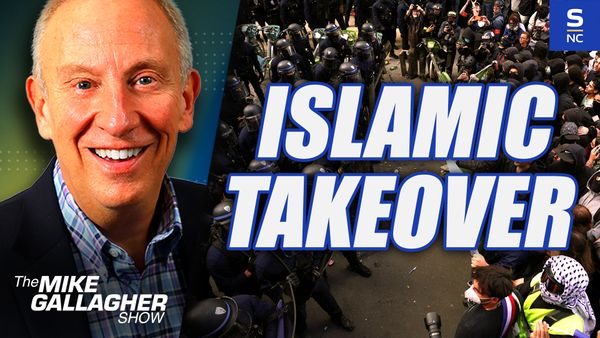
In this segment, Asra Nomani, a senior editor at Fox News Digital, discusses the recent protests and riots in Paris. She sheds light on how these demonstrations, often mislabeled as student protests, are being exploited by various ideological groups for broader objectives. Nomani identifies several organizations involved, noting that only a fraction are student-led, with the majority being communist, socialist, and far-left political groups. These entities are using legitimate grievances as a cover to incite chaos and revolution.
The discussion delves into the symbolism observed during these protests, including the presence of the hammer and sickle alongside Palestinian flags, indicating an alignment with anti-Israel and communist ideologies. Nomani highlights the deliberate targeting of Western symbols and the strategic use of propaganda, referencing figures like Nebel Roy Sengnam, who funds global networks with a communist agenda.
Further, the conversation touches on the financial backing behind these movements, with Nomani mentioning significant funding from U.S. nonprofits and European communist groups. She also discusses the role of diaspora communities in Europe and their involvement in the unrest, drawing parallels to similar coalitions forming in the United States.
The segment concludes by questioning whether the U.S. could face similar unrest, considering the ideological and demographic factors at play. Nomani emphasizes the need for vigilance and awareness among policymakers and citizens to identify and counteract these threats.
Jim Hansen, president of World Strat Security Studies Group and a former special ops veteran, discusses the growing national security threat posed by leftist activists in France. Hansen argues that these activists, part of a global network aiming to overthrow Western civilization and replace it with a new form of socialism, represent a direct threat to the United States and Western Europe. He highlights the lack of assimilation among migrants, the rise of Muslim-majority areas, and the failure of political leaders to address these issues adequately. Hansen warns that without decisive action, these groups could establish a new caliphate in Europe, with potential consequences for the United States. He emphasizes the importance of recognizing the threat and taking steps to protect Western values and civilization.
Ben Weingarten, a newsmax contributor and senior contributor at The Federalist, joins the discussion to shed light on the ongoing investigation involving Ilhan Omar. Weingarten, who authored a book detailing Omar's alleged collusion with foreign adversaries, Islamic supremacists, and instances of corruption and criminality, emphasizes the various threads of the investigation. These include immigration-related issues, false statements, conspiracy, and financial disclosures. The conversation highlights concerns over the potential bias in the investigation and whether Omar has been protected due to her Muslim identity and political affiliations. Weingarten also discusses the broader implications of the "red-green alliance," suggesting a convergence of left-wing revolutionaries and Islamic supremacists aiming to dominate Western ideologies. The discussion provides an in-depth look at the complexities and controversies surrounding Ilhan Omar's case, offering insights into the political and cultural dynamics at play.
Salem Media, our partners, and affiliates use cookies and similar technologies to enhance your browsing experience, analyze site traffic, personalize site content, and deliver relevant video recommendations. By using this website and continuing to navigate, you consent to our use of such technologies and the sharing of video viewing activity with third-party partners in accordance with the Video Privacy Protection Act and other privacy laws.Privacy Policy